New study: The Agentic AI gap
Read now
Reliably detecting tiny inclusions
Quality assurance in metal production
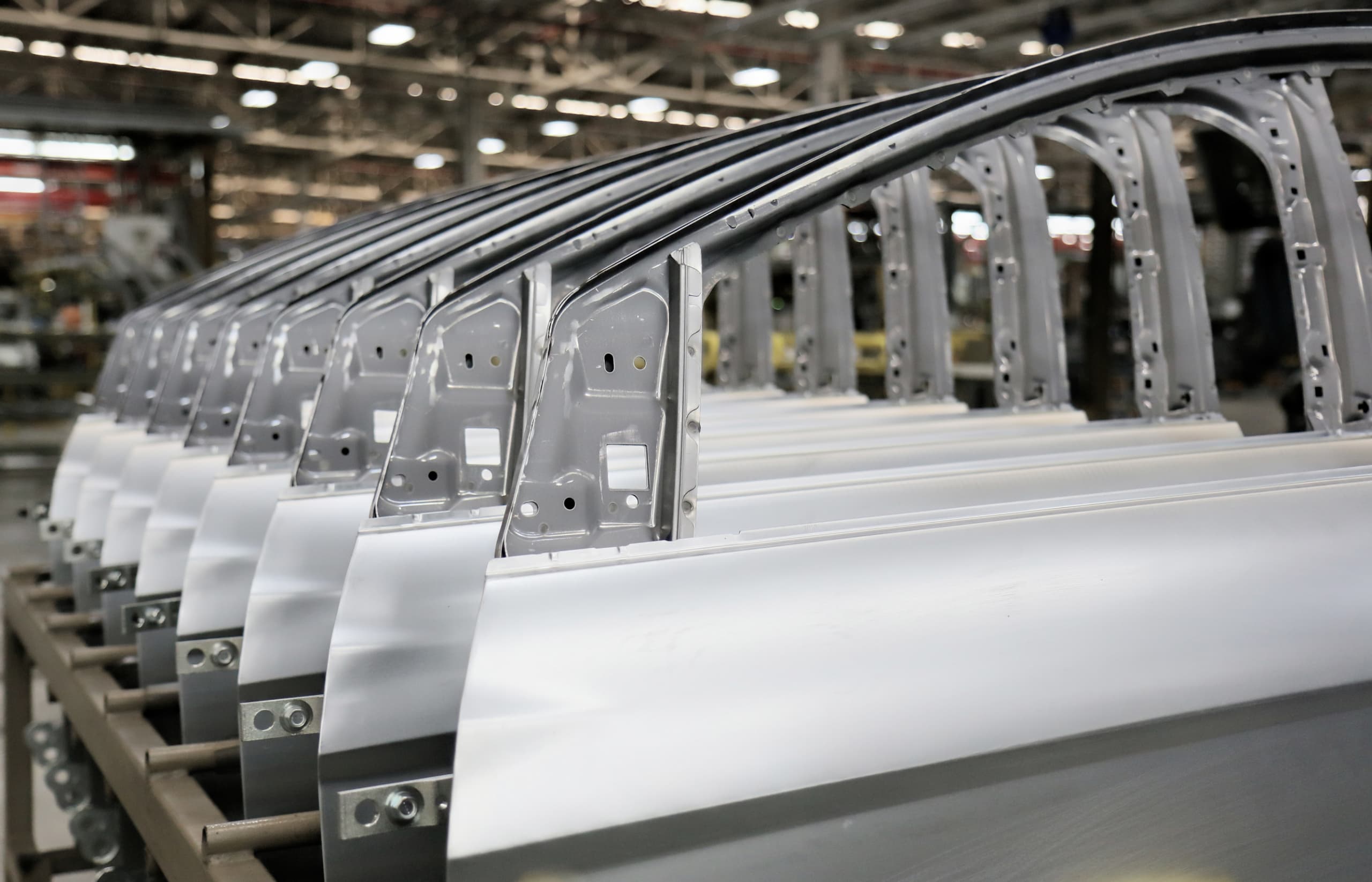
Sheet metal with manufacturing defects can rarely be further processed. The automotive industry in particular cannot continue working with a defective intermediate product due to its high requirements. Cutting to a smaller size can only be sold by the manufacturer to a very limited customer base and means a loss of margin. We approached the problem with a specially developed neural network architecture.
small inclusions are detected
detection accuracy if non-metallic inclusions (NMI) are present
Spoilers:
oxygen, nitrogen and sulfur
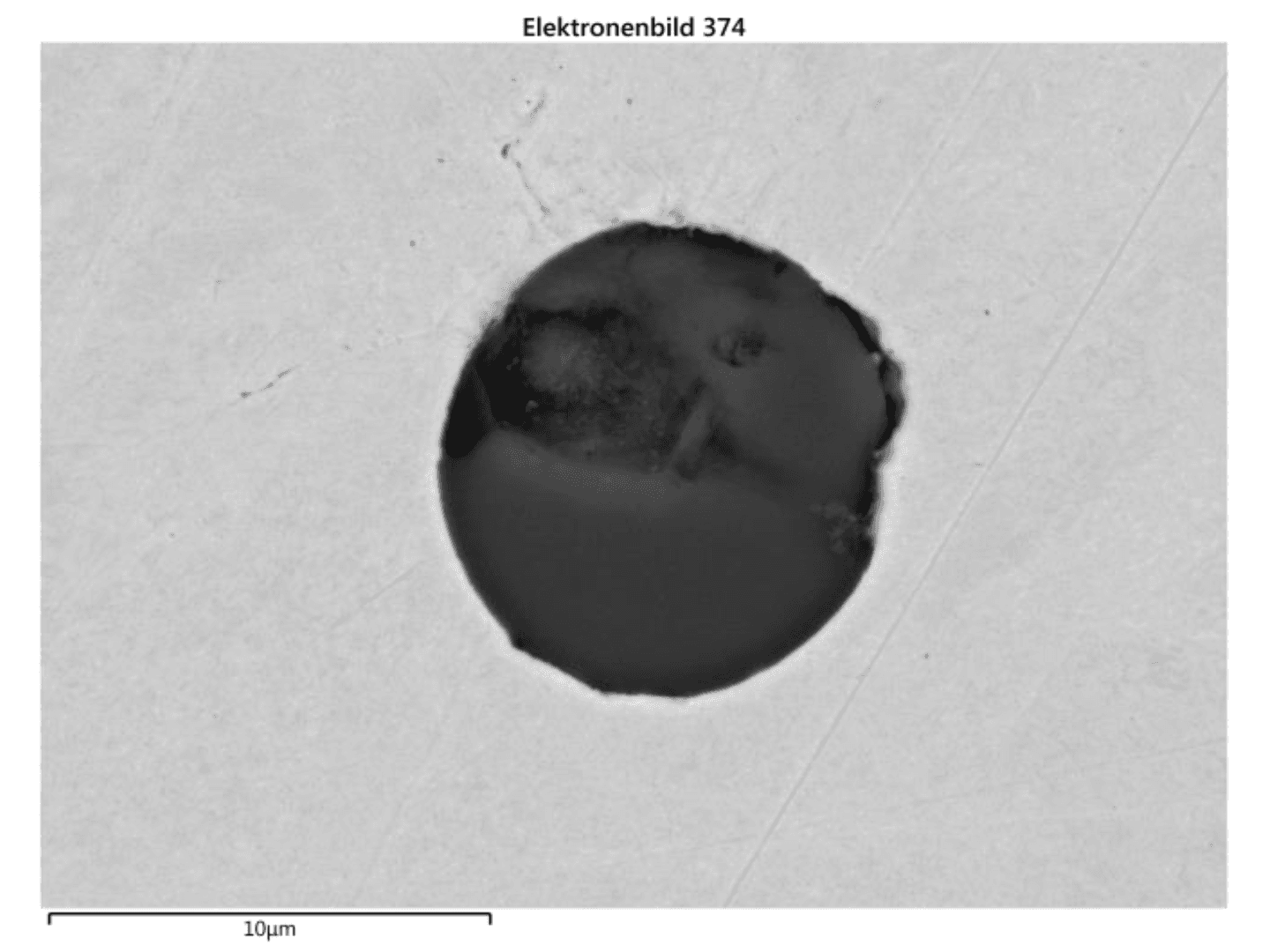
Scratches are not yet showstoppers at this stage of production. Non-metallic inclusions (NMI) are problematic because they permanently affect product properties. Oxygen, nitrogen and sulfur may become deposited in the alloy as oxides, nitrides and sulfides.
Challenge
Detection of very small troublemakers
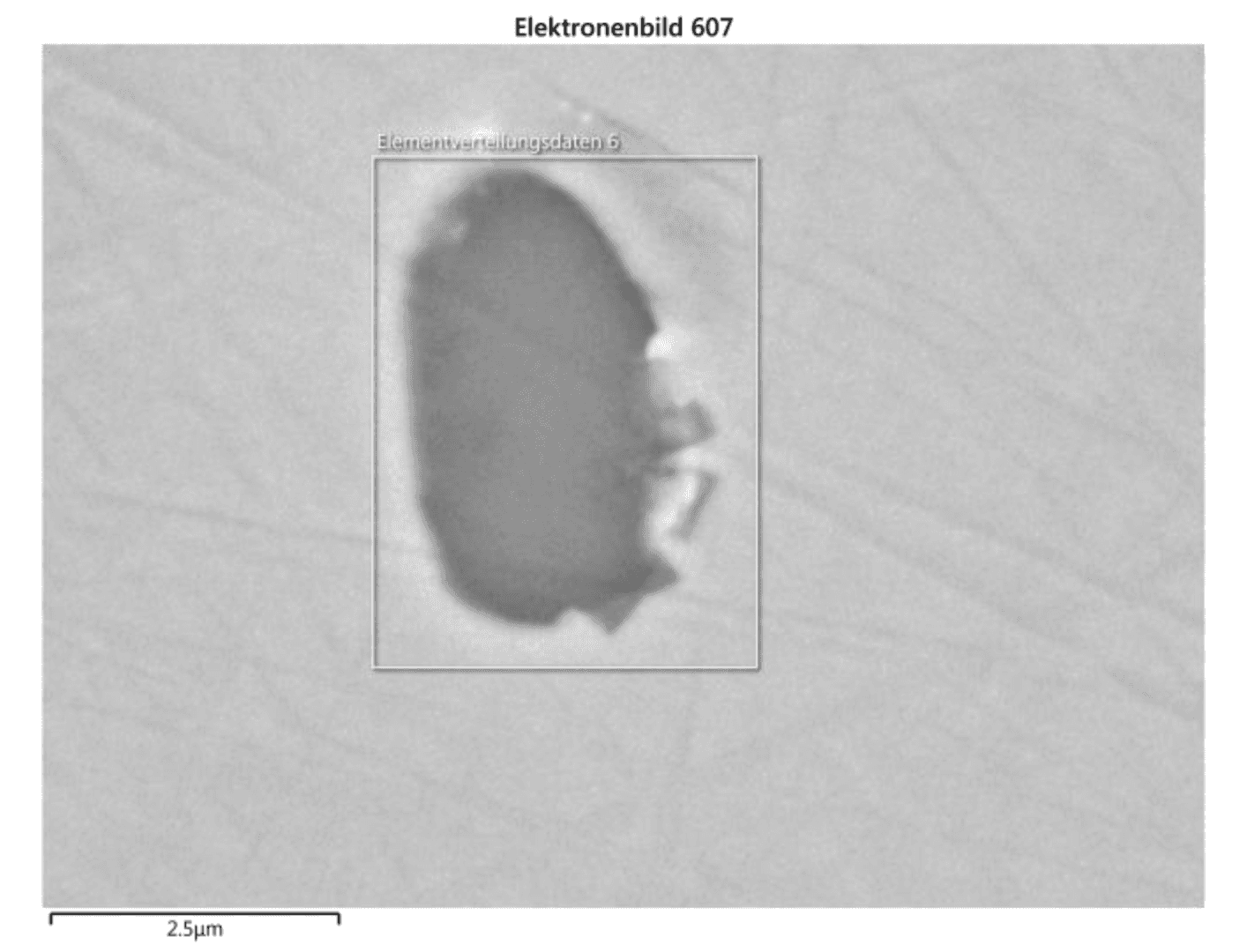
If this deposition has occurred, it is important to find out how severe the defect really is. To do this, we work with image classification. Oxide, for example, can be made out as a dark round dot under an electron microscope, while sulfide is much brighter. However, this optical recognition is time-consuming. And even an experienced laboratory worker cannot detect these micrometer-sized inclusions without error. Chemical analysis is reliable, but far too expensive.
Solution
Specially developed neural network architecture
For efficient automation, we work with a multi-class image classification model to identify whether it is a relevant material inclusion and what type of defect it is. The multi-stage approach is useful for efficiency reasons, so that full power does not have to be applied as soon as the irregularity is detected, but only when it is classified.
In the first step, any irregularity on the sheet surface is detected. Only in the second step is the image classified more precisely: Is it a scratch, or a pore that does not affect stability, or a dreaded non-metallic inclusion (NMI)?
Since the types of neural networks (Convolutional Neural Networks) widely used in computer vision are not designed for these tiny phenomena, we have, among other things, designed our own network architecture to process image sizes far below one micrometer.

The CD Laboratory
The CD Laboratory for Inclusion Metallurgy in Advanced Steelmaking is a research unit of the Christian Doppler Research Society. It is headed by Assoc.Prof. DI Dr. Susanne Michelic from the Chair of Ferrous Metallurgy at the University of Leoben. In the research period until August 2028, definitions and recognition accuracies of non-metallic inclusions (NMI) will be refined. The foundation for the use of machine learning and AI for this challenging project was laid with Cloudflight.
Christian Doppler (1803-1853) was an Austrian mathematician and physicist. He is known for the Doppler effect named after him.
Other references
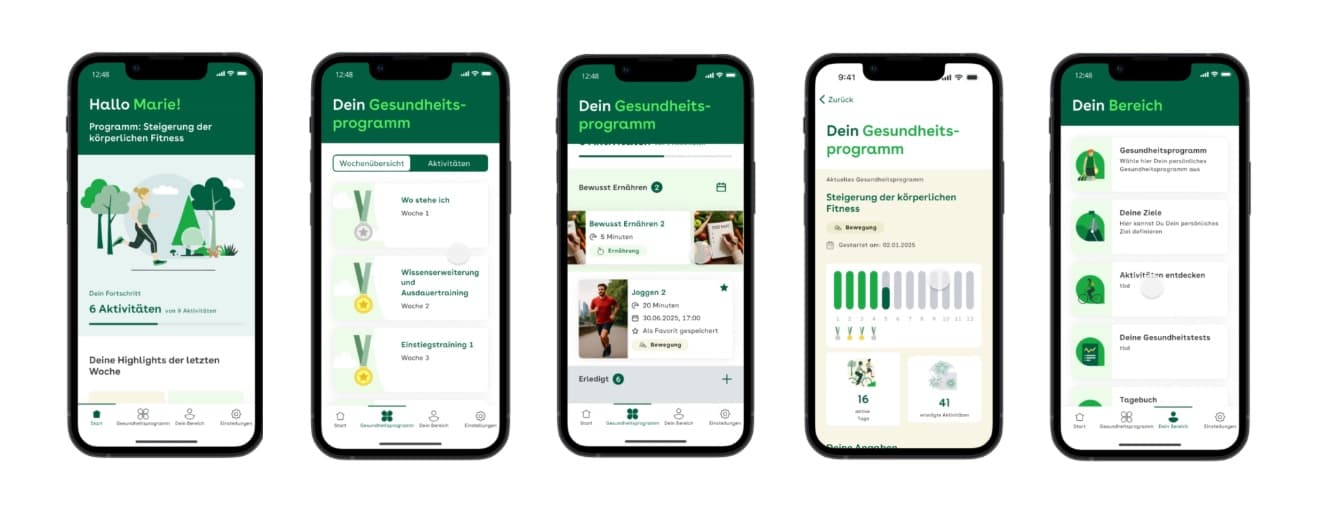

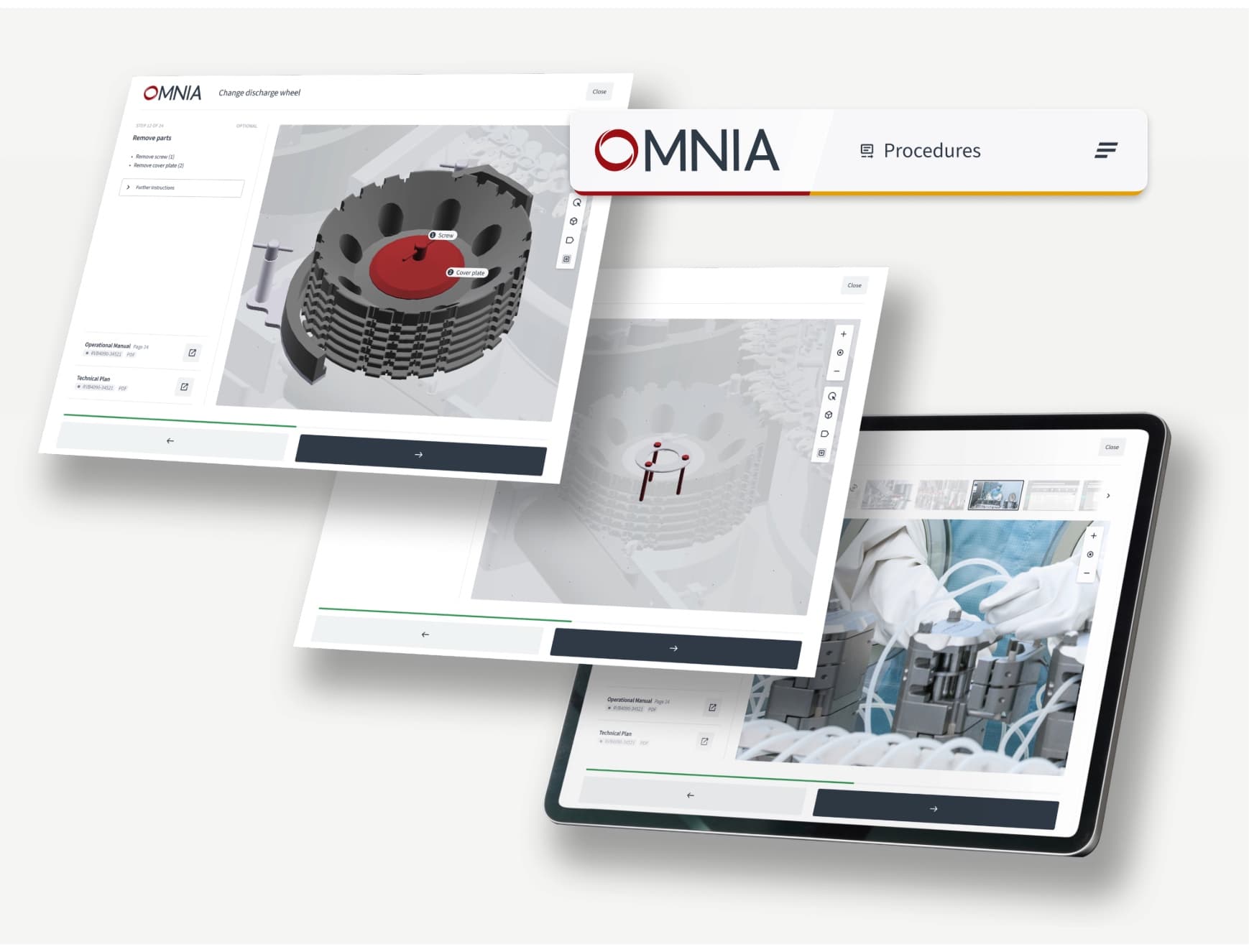


voestalpine myAPP reaches 12,000 employees with central information and strengthens cohesion
For voestalpine, Cloudflight created myAPP – a tailored app that connects 12,000 employees worldwide. It delivers central information, safety alerts, and interactive features that make daily work easier and strengthen team cohesion.





From complexity to order: Containex’s end-to-end partner portal solution
Discover how Containex revolutionized its operations and enhanced client interactions by implementing a custom partner portal. This innovative solution not only cuts down on internal effort but also empowers businesses to seamlessly buy and rent modular buildings and containers, setting new standard

Revolutionizing In-Store Experience
Discover how Schleich, one of Germany's largest toy manufacturers, transformed one of their flagship stores with an innovative interactive app that empowers customers to create personalized figurines. This dynamic solution not only enhances the shopping experience but also seamlessly integrates with

AWS EKS in action: transforming Europe’s leading textile provider
Learn how one of Europeans largest provider of textile solutions gained more agility and efficiency thanks to a new web app based on containers and deployed on a managed EKS cluster. EKS auto-scales to handle traffic & integrates with FluxCD pipelines for automated deployments.



BÉBÉ Concept’s seamless migration to Shopify Plus
BÉBÉ Concept is a women-driven brand offering a curated selection of products for mothers, children, and families, combined with expert insights on parenting and child development, all supported by a seamless migration to Shopify Plus and the integration of PIM Akeneo.