New study: The Agentic AI gap
Read now
Accuracy in quality prediction
Improving predictive quality in brownfield CNC machines
The ability to predict part quality is an increasingly valuable asset in the evolving manufacturing landscape.
The widespread use of Computer Numerical Control (CNC) machines offers a unique opportunity to integrate predictive analytics for better quality control. Specially mounted sensors e.g. on the spindle housing offer additional advantages – they are sensitive yet isolated from operational hazards such as flying chips, oil, and other debris, allowing for more efficient data collection.
sampling rate
raw data per hour
different tool operations
The challenge
Balancing data and performance
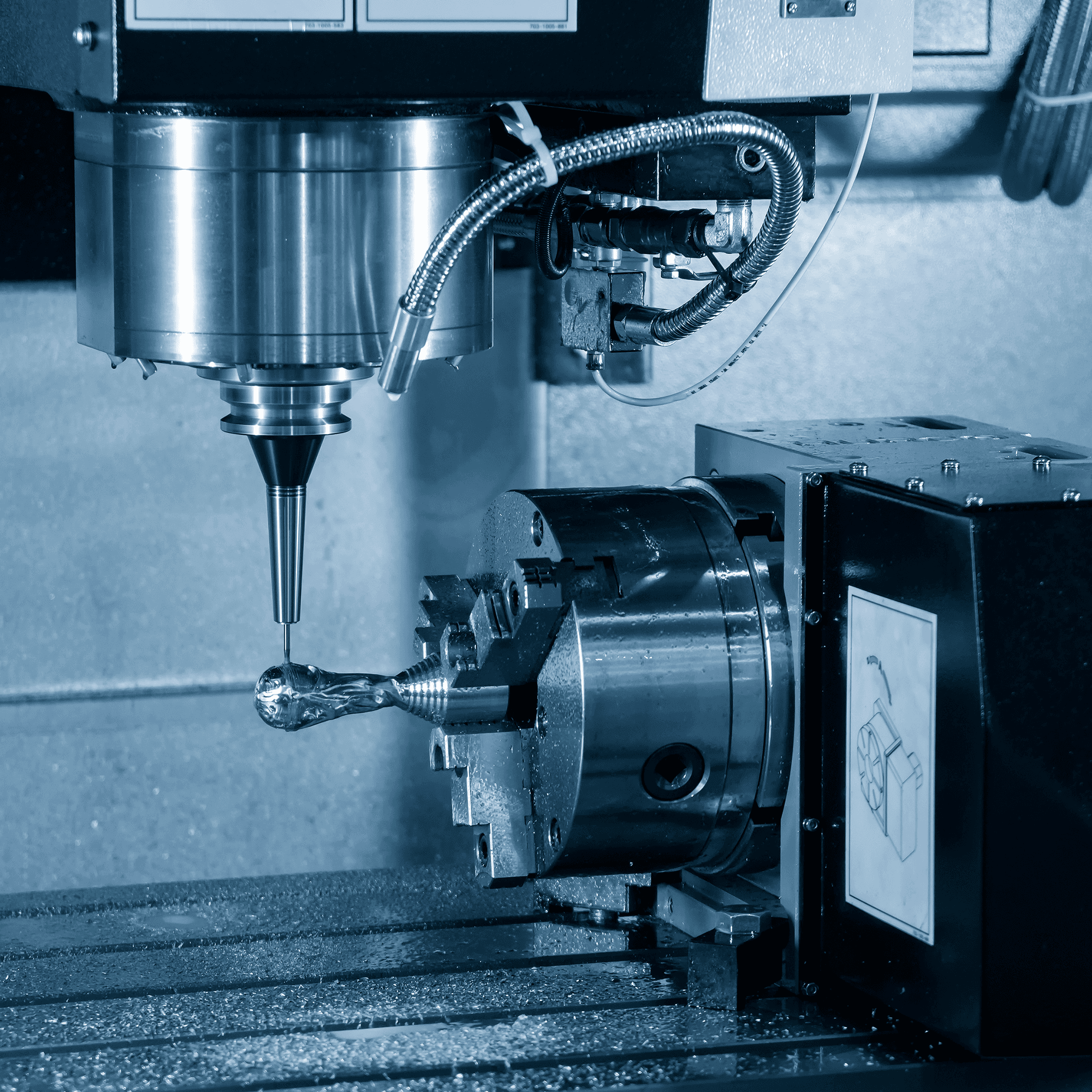
The primary challenge is to accurately predict the quality of parts produced by a 4-axis horizontal CNC machining center. These centers are inherently versatile and capable of performing more than ten different processes.
A variety of variables, such as motor and spindle conditions, must be continuously monitored. With multiple data sources and varying measurement intervals, managing the large amount of data generated is a complex task. In addition, there usually is a strong imbalance in the labeled data: most produced parts are of good quality and only a few – usually a low one-digit percentage – are tested as bad quality.
The solution
A data-driven approach to quality prediction and efficiency
Data Capture
To address these challenges, accelerometers are installed at the rear of the machine on the spindle housing. These accelerometers are designed to capture critical data, which is then analyzed in both the time and frequency domains to detect anomalies.
Edge processing
Given the huge volume of data, edge computing is used to process the data in real time, reducing latency and providing immediate feedback on the shop floor. Production experts annotate this data using intuitive input masks, improving data quality and accuracy.
Cloud-based training
Machine learning models are trained in the cloud, taking advantage of its vast computational resources. After training, these models are deployed back to the edge for immediate, real-time analysis.
Multi-directional monitoring
For a complete understanding, measurements are taken in three directions – x, y, and z – to monitor vibrations and frequencies. Anomalous production processes are flagged and fed back into the data training pool for continuous model refinement.
User interface
The user interface of the solution is designed with the end-user and efficient workflows in mind, incorporating a traffic light system to indicate machine status and pinpoint which measured elements are showing anomalies.
With this structured solution, we have successfully overcome the challenges posed by the high versatility and data complexity of 4-axis horizontal CNC machining centers. The result is a predictive quality model that significantly reduces the risk of producing defective parts, and improves overall operational efficiency, leading to higher OEE and achieving ROI on time.
We would like to discuss with you the opportunities of predictive quality for your company considering the settings of your production processes and our expertise.